

Screen Time Shock: Are Indian Kids Spending Too Much Time Online?

Screen Time Struggle? You're Not Alone, Indian Parents!
Are you constantly battling your little one over screen time? Does the thought of snatching away that tablet fill you with dread, knowing a meltdown is just moments away? If you're an urban Indian parent, chances are you're nodding along. And guess what? You're definitely not alone.
Pause here and look around...if your kids are around, it may be a good idea to stop reading this and spend some time with them!

A recent study from AIIMS Raipur, published in Cureus, has thrown a spotlight on something many of us instinctively knew but perhaps didn't want to confront: Indian children under 5 are spending an average of 2.2 hours daily in front of screens – that's double the recommended limit!
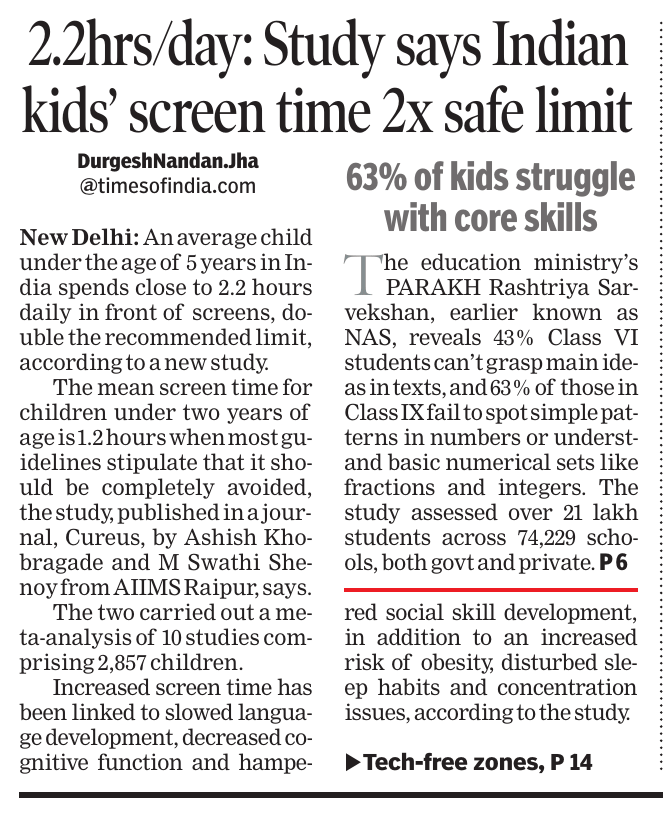
Even more concerning, kids under two are getting 1.2 hours of screen time per day when most guidelines say it should be zero.
As a doctor practicing in India, I see this struggle in my clinic every day. Parents tell me about using screens to get a few minutes of peace, to manage meltdowns, or simply because it feels like everyone else's kids are doing it. It's tough, I get it. The digital world is everywhere, and it's incredibly alluring for tiny hands and curious minds.

Why Does This Matter So Much?
The study echoes what we've known for a while: too much screen time for our little ones isn't just about them being glued to a device. It has real, tangible impacts on their development:
Slower language development: Real-world conversations build vocabulary and communication skills, not passive screen viewing.
Decreased cognitive function: Screens offer instant gratification, but they don't challenge young brains to problem-solve, imagine, or explore.

Hampered social skills: Looking at a screen doesn't teach a child how to share, empathize, or navigate peer interactions.
Increased risk of obesity: Less movement means more weight gain. Simple as that.
Disturbed sleep habits: The blue light from screens messes with melatonin production, making it harder for kids to fall and stay asleep.
Concentration issues: Constantly shifting, highly stimulating content can make it difficult for children to focus on less dynamic, real-world tasks.
Reading this might make you feel worried, or even a little guilty. Please, don't. The fact that you're even thinking about this means you're a fantastic parent who cares deeply about your child's future. This isn't about shaming; it's about empowering you with information and practical steps.
Ready for a Digital Detox (Sort Of)? Practical Tips for Urban Indian Parents
Let's be realistic: eliminating screens entirely might feel impossible for many of us. But even small, consistent changes can make a massive difference. Here's how you can gently but firmly steer your child towards a healthier relationship with screens:
For Our Tiniest Tots (Under 2 Years): Aim for ZERO
This is the golden rule. Their brains are developing at an incredible pace, and they need real-world interaction, not flashing lights.
Talk, Talk, Talk: Sing songs, narrate your day, read aloud. These interactions are brain-builders.
Hands-On Fun: Think rattles, soft toys, blocks, and even safe kitchen utensils for sensory exploration.

Outdoor Adventures: A quick walk in the park, looking at trees, feeling grass – these are huge for their development.

Out of Sight, Out of Mind: If the TV is off or the phone isn't visible, they're less likely to demand it.
For Our Little Explorers (2-5 Years): Less is More (<1 Hour Daily)
This age group needs limits and engaging alternatives.
You're the Role Model! Kids copy us. If you're constantly on your phone, they'll want to be too. Try to reduce your own screen time when your child is around.

Screen-Free Zones & Times: Make the dinner table and bedrooms screen-free zones for everyone. No phones during meals, no tablets before bed.
Unlock Their Imagination:
Reading Bonanza: Make reading a special time. Go to a local library, explore picture books, make up stories together.

Get Crafty: Drawing, painting, play-doh, building with blocks – simple materials, endless possibilities.

Nature Calls: Head to the nearest park. Let them run, climb, collect leaves. Unstructured outdoor play is magical.

Pretend Play: Old clothes for dress-up, empty boxes turning into forts – encourage their inner storyteller.
Little Helpers: Involve them in simple chores. Sorting laundry, watering plants, setting the table – it builds responsibility and skills.
Consistency is Key: Set clear time limits (a timer can help!). Stick to them. It will be tough initially, but they'll adapt.
Choose Wisely (If You Must): If screens are used, pick high-quality, educational content. And watch with them, interacting and talking about what you see. Don't just use it as a babysitter.
Protect Their Sleep: Screens before bed are a definite no-no. Create a calming bedtime routine that doesn't involve glowing devices.

Simple yet wise
You Can Do This!
This isn't about being perfect; it's about making conscious choices for our children's healthy development. Every time you choose a book over a tablet, a park over a phone, or a conversation over a cartoon, you're investing in their future.
Let's work together to give our children the best possible start, away from the constant glow of screens and into a world of vibrant, real-life experiences. If you're struggling, talk to our pediatrician – we're here to support you every step of the way.



Comments