

The Science of Flow: Boosting Adolescent Mental Health in the "Distraction Economy"

In our clinical practice in Mumbai, we increasingly see teenagers struggling with fragmented attention and rising anxiety.
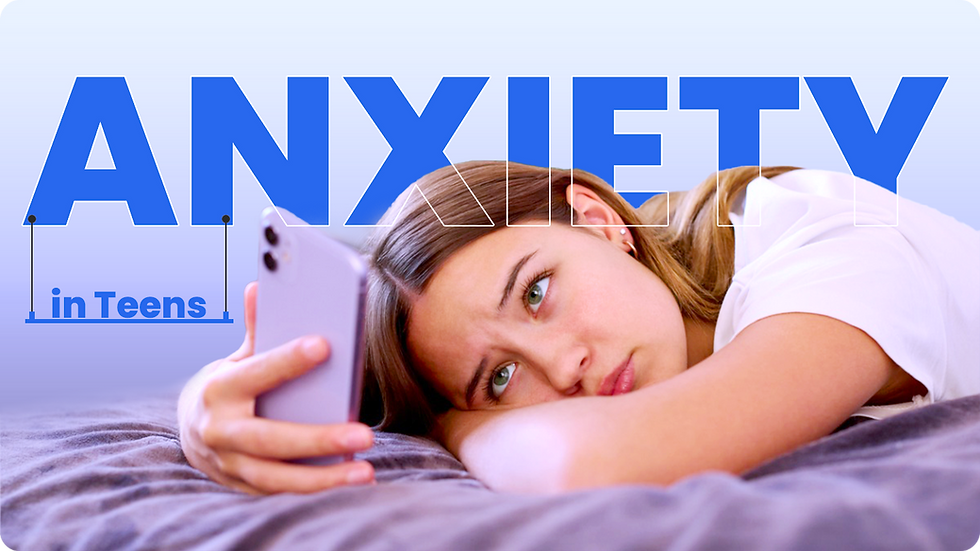
We live in a distraction economy, where digital triggers—from social media notifications to the relentless pace of city life—are engineered to hijack the brain's attention systems.
For parents and teenagers alike, understanding the medical concept of "Flow" is a powerful tool for cognitive health and emotional regulation.
What is Flow? A Neurological Perspective
Flow is a state of optimal experience where the brain becomes so efficiently engaged in a task that the "outside world" ceases to exist. While it feels effortless, it is actually a state of high-level neural coordination.

The Brain's "Default Mode Network" (DMN)
Neuroscientific reviews show that entering a flow state suppresses the Default Mode Network (DMN). This is the brain's "inner critic" or ruminative center—the part of the brain that wanders, worries about exams, or dwells on social pressures. By quieting the DMN, flow reduces anxiety and mental fatigue.
Efficient Attention Allocation
Unlike forced concentration, flow allows for the efficient activation of attention networks. Research using simulated high-focus tasks (like racing) shows that while mental effort and gaze focus are at their peak during flow, the person feels less exhausted. In the context of a Mumbai student’s busy schedule, flow is not about working harder, but about working with greater neural efficiency.
Flow vs. Hyperfocus: The ADHD Distinction
It is vital for parents to distinguish between Flow and Hyperfocus, especially in students with ADHD.
Flow is directed and intentional. It involves a sense of control and a balance between skill and challenge.
Hyperfocus often "happens" to the person (e.g., losing six hours to a smartphone screen) and can be difficult to break, often leading to "monotropic flow" that interferes with sleep hygiene.
For a teenager with ADHD, the raw capacity for absorption is a cognitive asset, but it requires clear goals and structured environments to be channeled from accidental hyperfocus into productive flow.
Prescription for Flow: Hobbies in the City
For teenagers in Mumbai, finding "quiet" can be a challenge. Hobbies serve as a clinical mechanism to induce flow and silence both external noise and internal rumination.
1. Athletics and Sports

Whether it’s a morning game of badminton or competitive tennis, sports are elite flow-inducers. A study of junior athletes found that those who focused on effort and skill improvement—rather than just the win—experienced more frequent flow states. This shift from "outcome-based" to "process-based" thinking is a key protector against burnout.
2. The Creative Arts

Music: For students learning instruments, concentration and clear practice goals are the gateway to flow.
Drama and Theatre: Acting students reach flow by stepping into fictional roles, which effectively shuts down self-referential processing (the "inner critic").
3. Gaming and Role-Play
While video games are high-flow activities, we advise caution regarding sleep latency. The absorption can be so intense that it delays the brain's transition to rest. Conversely, tabletop role-playing games (like Dungeons & Dragons) offer similar flow benefits with the added neuro-protective advantage of face-to-face social interaction.
Clinical Conclusion
Committing to a flow-inducing hobby is more than just "taking a break." It is a vital exercise for the adolescent brain. By reducing "internal noise" and retraining the attention networks, teenagers can build resilience against the stresses of modern urban life.
As we navigate the academic and social pressures of Mumbai, finding your flow is not just a luxury—it’s a pathway to better mental health.


SYSTEMATIC EXPLANATION + ADVICE: THANKS DR S P MATTHEW SIR BEST